

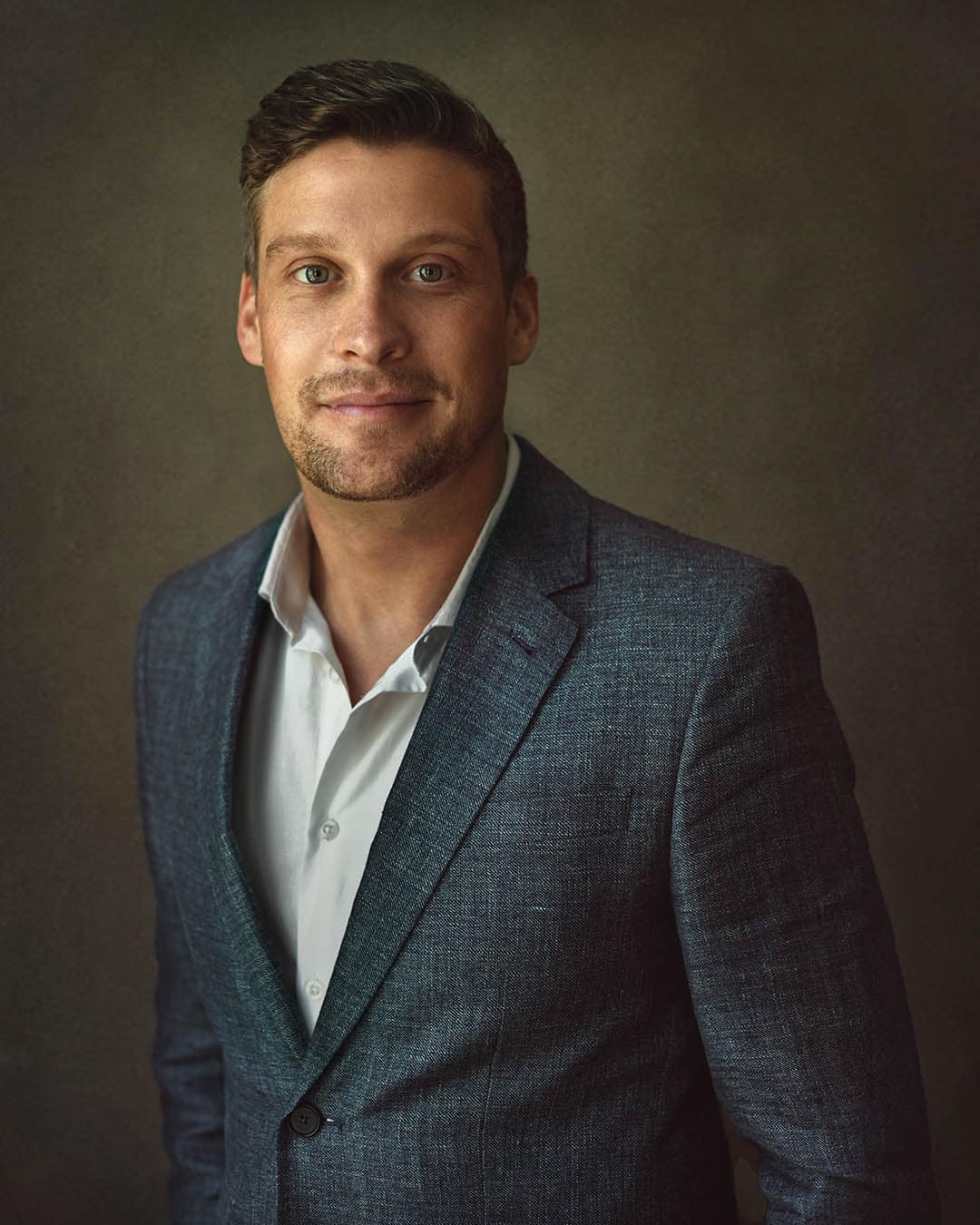
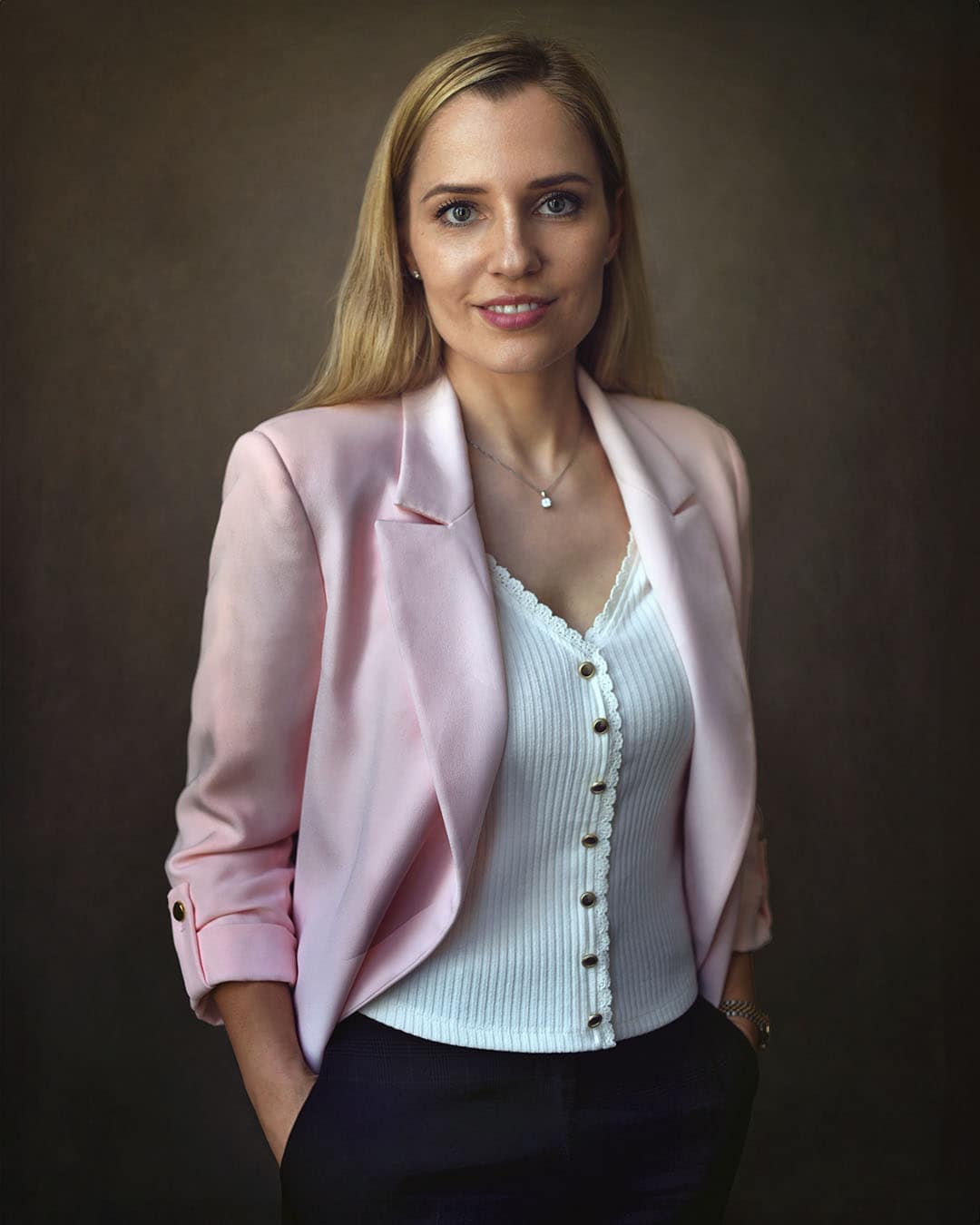
One of the most common things people tell me before a professional headshot session is, “I am not photogenic,” or, “I always look awkward in photographs.”
My answer is always reassuring. Most people do not feel completely comfortable in front of a camera. I do not feel entirely comfortable there either. The good news is that looking natural is not something you need to learn before your session.
You do not need to arrive knowing how to pose, where to place your hands or how to produce the perfect smile. My role is to guide you through the process, give you enough time and create an atmosphere in which you can gradually stop thinking about the camera.
Many people assume that looking natural means knowing how to pose well. In reality, trying to strike a pose can often have the opposite effect. The moment you become too aware of your body, your expression can begin to feel stiff or performed.
I will still guide your posture, the angle of your shoulders, the position of your face and where to look. The difference is that the direction should never overpower your personality.
The aim is not to make you look posed. It is to help you appear as though you are having a real conversation with the person viewing the finished portrait.
In most of my professional headshots, I ask clients to look directly into the camera lens. During the session, that creates a connection with me and with the camera. In the finished photograph, it becomes eye contact with the viewer.
Direct eye contact can make a portrait feel confident, approachable and personal. It allows more of your character to come through than a carefully manufactured smile ever could.
Because we are genuinely talking throughout the session, I can photograph the moments when your attention is engaged and your expression feels alive. You may still be following my guidance, but the expression itself belongs to you.
The best professional headshot is rarely created within the first few minutes. At the beginning of a session, you are still adjusting to the surroundings, the camera and the experience of being photographed.
That is completely normal. You should not expect yourself to feel relaxed immediately.
My sessions usually take between thirty minutes and one hour. That gives us enough time to talk, make adjustments and allow the initial self-consciousness to fade.
When the barriers begin to come down, you stop trying to create an expression. Your real character starts to appear naturally.
I do not approach a portrait session as though I am simply photographing you from the other side of the camera. I see it as a partnership.
We talk. I ask about you, share a little about myself and explain what we are doing as we progress. This exchange helps the session feel less like a performance and more like a conversation.
Several clients who initially described themselves as camera shy have later said that the experience felt comfortable and relaxed. That comfort is not separate from the final photograph. It is visible within it.
One of the most effective ways to become more comfortable is to see that the photographs are already working.
During the session, I regularly show clients the images we have created. Sometimes I point out a small adjustment that could make the next photograph stronger. Other times, the image already looks excellent straight from the camera.
Once you see yourself looking confident and natural, the uncertainty begins to disappear. You realise that you do not look awkward, and you no longer need to worry about whether you are doing something wrong.
That growing confidence usually makes the next set of photographs even stronger.
For me, natural light is fundamental to creating a professional headshot that feels authentic.
Soft window light creates subtle transitions across the face, natural-looking skin tones and a sense of depth. It can be refined and flattering without making the portrait feel artificial or overly produced.
Before expression, posing or editing are considered, the quality of the light already shapes how natural the final portrait will feel.
When the light feels believable, it becomes easier for the person within the photograph to feel believable too.
A professional headshot should represent you in the best possible light, both literally and figuratively. It should not turn you into somebody your colleagues, clients or professional contacts would not recognise.
Choose an outfit that reflects how you genuinely present yourself in your professional life. Avoid distracting patterns, prominent logos and visible creases, but do not wear something that feels like a costume.
The same principle applies to hair and makeup. Preparation matters, but your appearance should still feel familiar and authentic.
The best professional portrait is not a reinvention. It is a polished and confident expression of the person you already are.
Looking natural in professional headshots is not about producing a perfect smile or pretending the camera is not there.
It happens when the barriers begin to fall and your expression starts to reveal the depth of your character. In my experience, that comes through time, interaction, thoughtful direction, natural light and editing that refines the portrait without changing the person.
You do not need to practise looking natural before your session. Come as yourself, allow the process to unfold and trust that you will be guided through every step. The goal is for you to recognise yourself in the finished portrait, while also seeing the confidence and character that others already see in you.